Work shoes is the umbrella term for the shoes you wear at work. It covers both safety footwear and occupational footwear, and they are sometimes called work footwear or protective footwear. The right work shoe depends on what you need: protection, water resistance, warmth, comfort or fit. Here we go through them one at a time.
The biggest difference is the toe cap. A safety shoe has a toe cap that protects the toes against falling objects and crushing injuries. The toe cap can be steel, aluminium or composite, and all three meet the same requirements. Read more in our guide Steel toe cap shoes?
An occupational shoe has no toe cap. It can have other protection, such as a slip-tested sole, but it is not a safety shoe.
Safety shoe
Occupational shoe
Toe cap
Yes
No
Standard
EN ISO 20345
EN ISO 20347
Classes
SB–S7
OB–O7
Start with the risks in your work
Start from the risks in your work, not from your job title. The choice should be based on the workplace risk assessment. The safety class on the shoe shows which protection is included.
SB
Toe cap and slip-tested sole
S1
SB plus closed heel, shock absorption in the heel and antistatic
S2
S1 plus water-resistant upper
S3
S2 plus penetration-resistant midsole and cleated outsole
S7
S3 plus water resistance of the whole shoe
Each class builds on the one before. S6 is S2 plus water resistance of the whole shoe. S4 and S5 apply to rubber or polymer boots.
Want to know more about the classes, rubber or polymer boots (S4, S5) and additional markings? Read our Guide to safety footwear.
Work shoes for water and wet conditions
If you work in wet conditions, you need a shoe that keeps your feet dry. How much water the shoe has to cope with decides which class you choose.
If you have …
Choose
Wet conditions and splashes
S2 or S3
Standing water or wet terrain
S6 or S7
An S3 shoe is not waterproof. Only the upper is tested against water. If you want the whole shoe to be tested, choose S6 or S7. Read more in S3 or S7?
In winter, your feet need protection against cold, wet and slippery conditions. Look for these markings:
Cold · CI
Cold-insulating sole. The sole is tested to insulate against cold from below.
Wet · WR
The whole shoe is water-resistant. Included in S6 and S7. In snow and slush, a water-resistant upper (S3) is often enough, but if you stand in water or wet snow for long periods, choose S7.
Slip · SR
Slip-resistant sole, tested on a slippery, oily surface. The test is not carried out on ice, and no shoe is slip-proof.
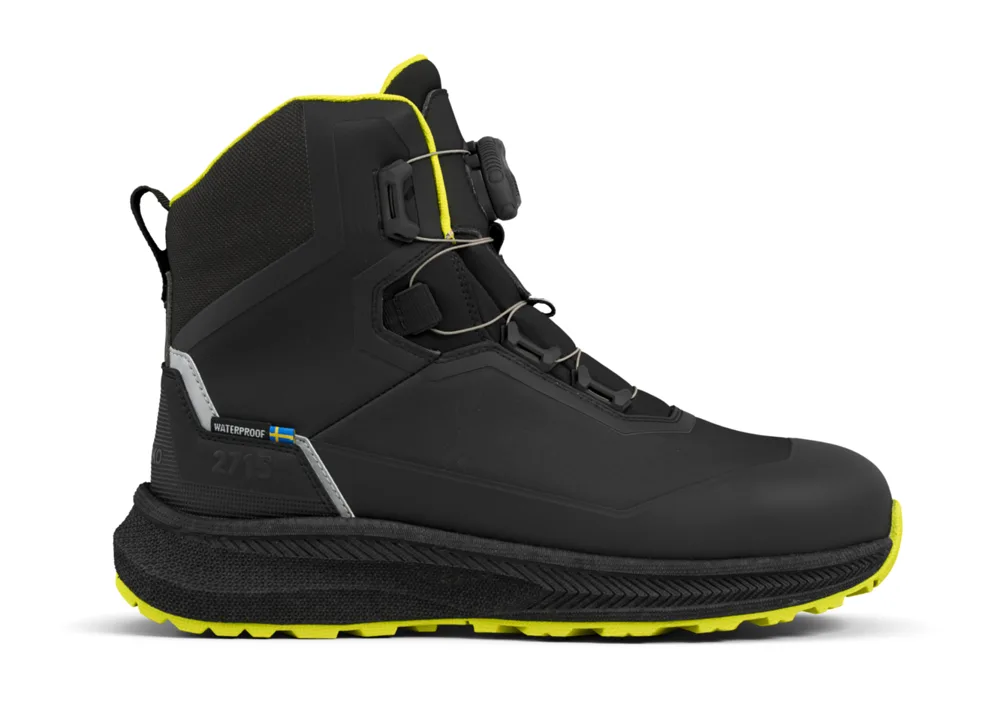
The lining determines how warm the shoe feels. A lined leg keeps the warmth in and makes the shoe comfortable to wear for a whole day outdoors. A work boot gives more warmth and support than a low shoe, and it also keeps the snow out.
Grip gets worse as the sole wears, so take extra care on ice. Read more about cold, wet and slippery conditions in Winter safety footwear.
Comfortable, lightweight work shoes
You stand and walk in your work shoes all day. That makes comfort just as important as protection. These things make the biggest difference:
Cushioning. From class S1 upwards, the heel is shock-absorbing. It takes the edge off the impact of every step when you walk on hard floors.
Low weight. A light shoe means less fatigue, especially when you walk a lot.
Flexibility. A shoe that flexes with your foot feels less stiff and gives a more natural movement.
Fit. The best cushioning does not help if the shoe pinches. Read more under Fit.
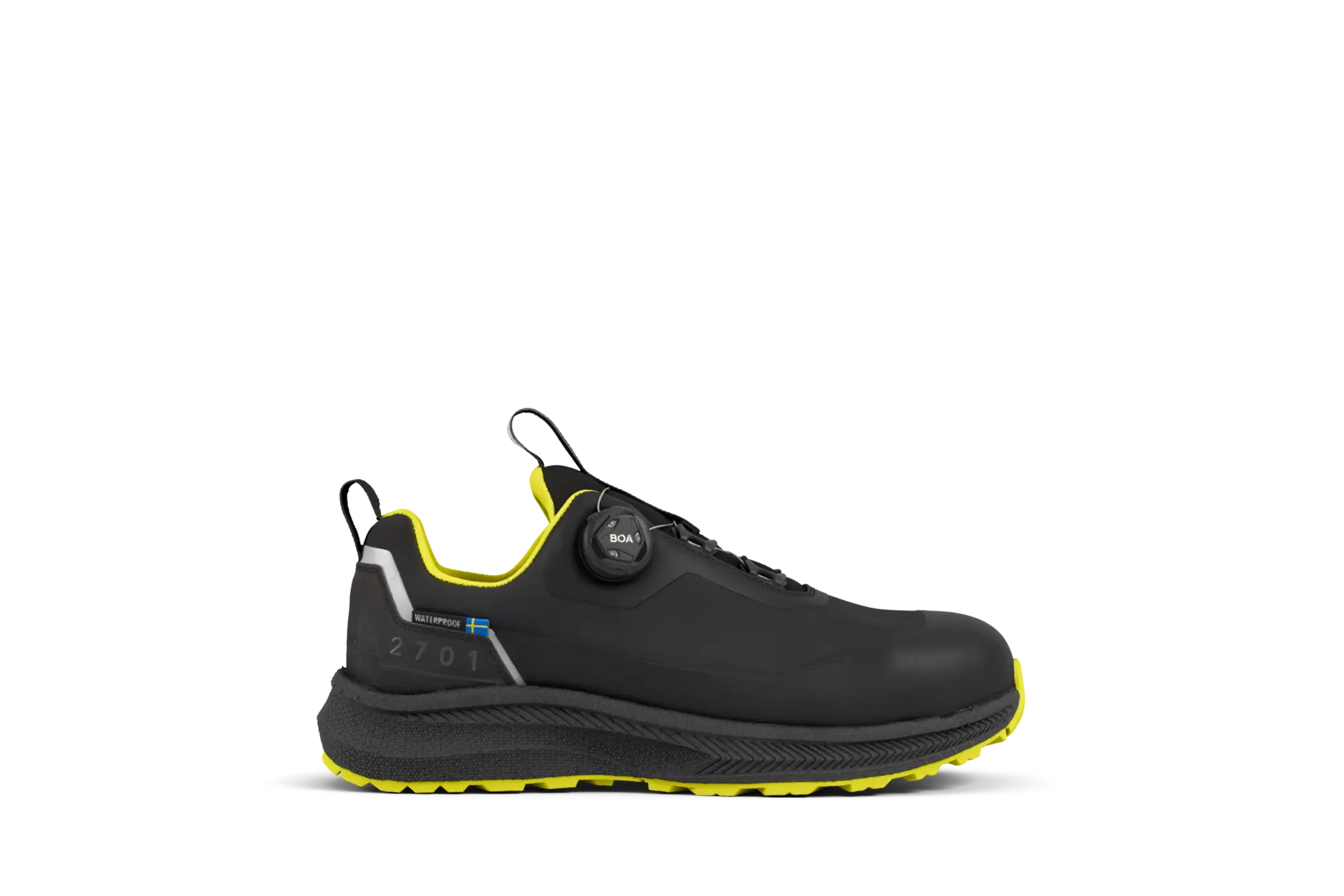
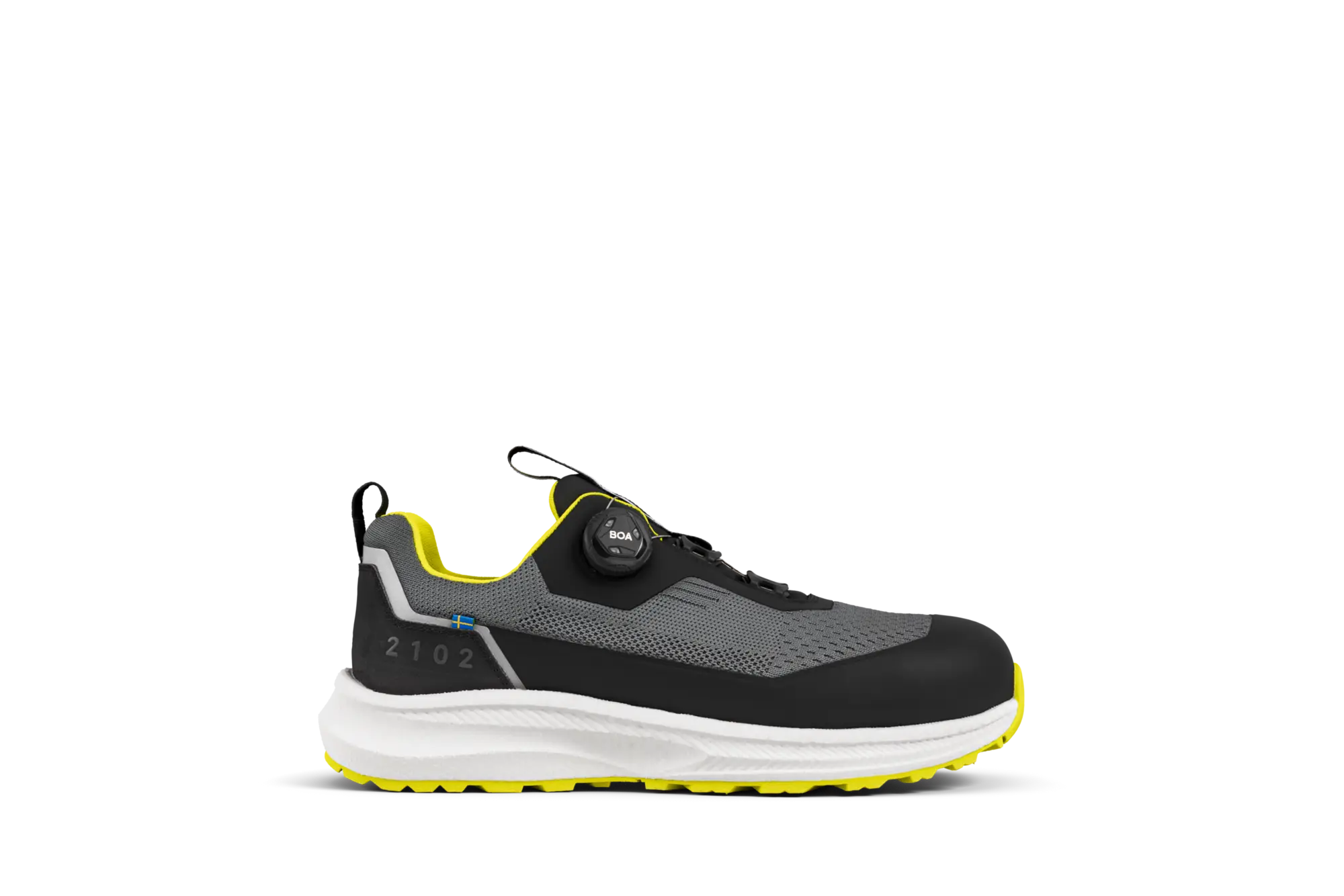
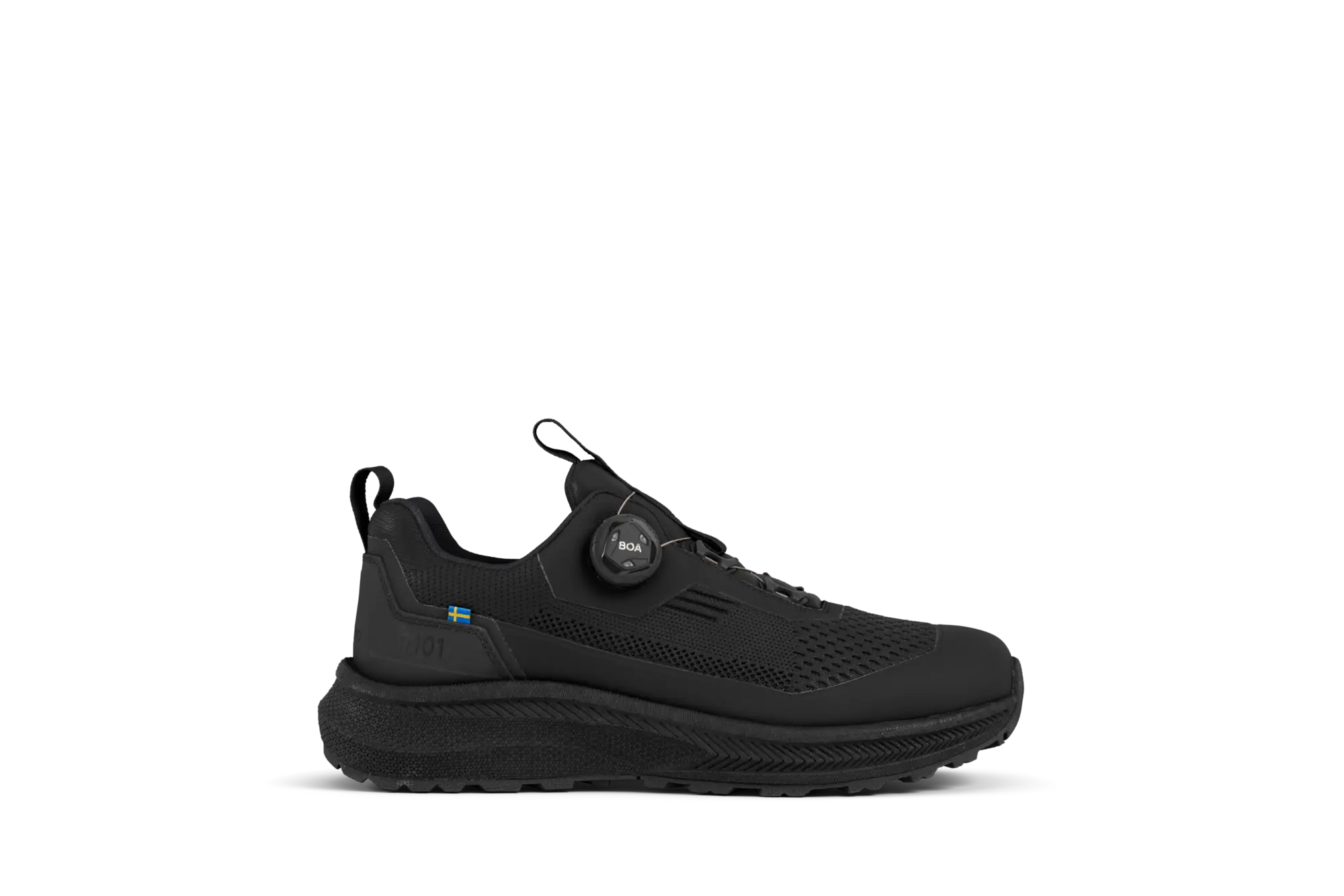
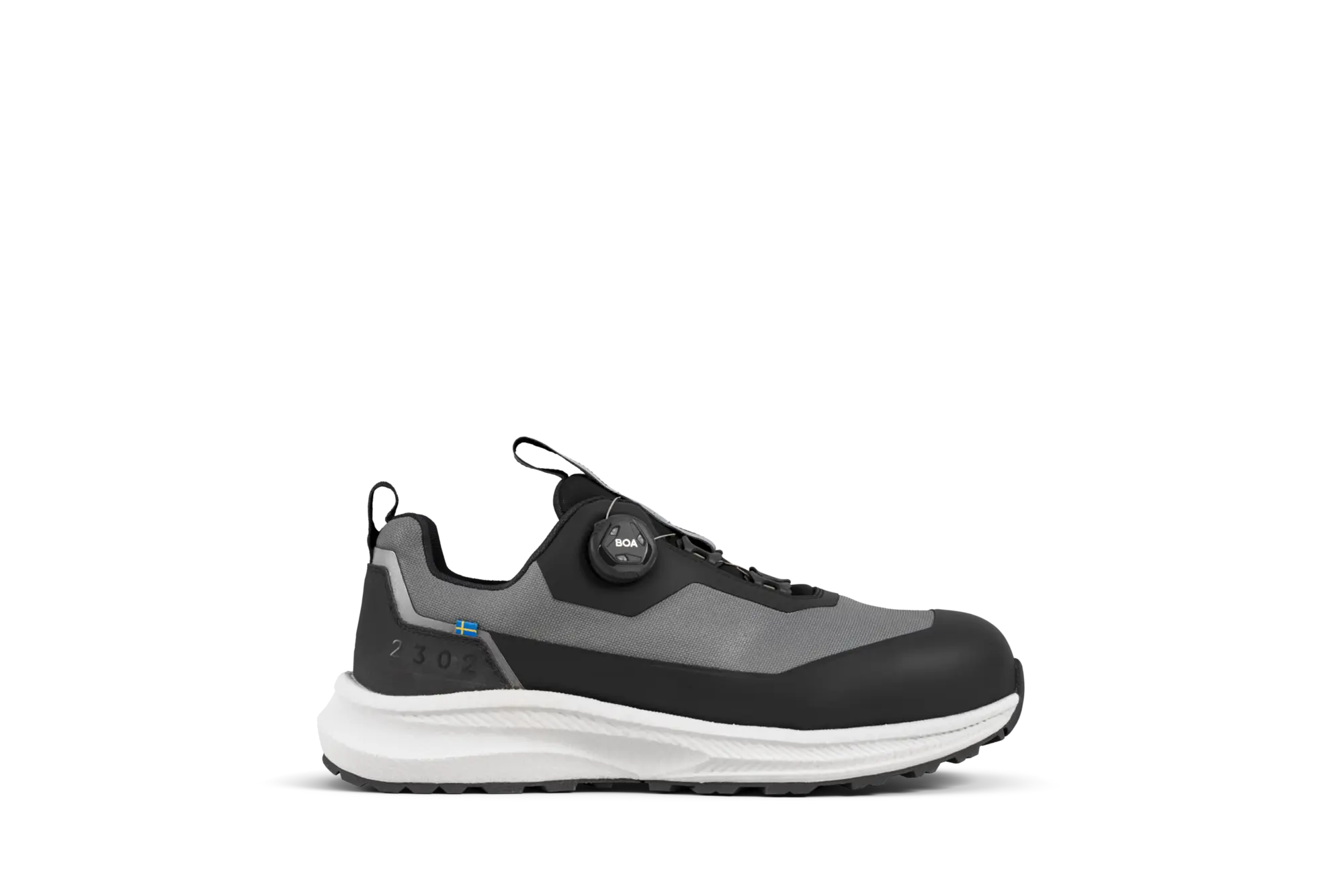
Want safety shoes with a trainer feel? Arbesko Tech is built for those who are on the move throughout the working day. The ReBOUND™ cushioning in the midsole gives a soft, responsive step, so you have more energy all day. All safety shoes in the series have Tech Weave™, a textile penetration-resistant midsole that is both light and strong.
Tech 2102 Safety shoe S1PS, FO, HRO, SR View Tech 2102Tech 1101 Occupational shoe without toe cap O1, FO, HRO, SR View Tech 1101
A comfortable shoe is also a safer shoe. Shoes that feel good get worn.
Fit: width, women and men
A shoe that fits properly rubs less and helps you last the whole day. Feet come in different widths, and shoes should too.
Wide feet and a wide toe box. Do you have wide feet or need more room for your toes? Bredsjö is our series for wide feet. It comes as two shoes and a boot.
Work shoes for women. Arbesko shoes are built on a narrower last, a women’s last, up to size 38. If you have a narrower foot, you get a better fit and less heel slip.
Work shoes for men. From size 39, the shoes are built on our standard last. If you need more width, choose Bredsjö.
How to try them on. Try the shoes on at the end of the day, when your feet are at their largest. Wear the socks you use at work. The toe cap must not press against your toes, whether you are standing or walking.
Work shoe or work boot?
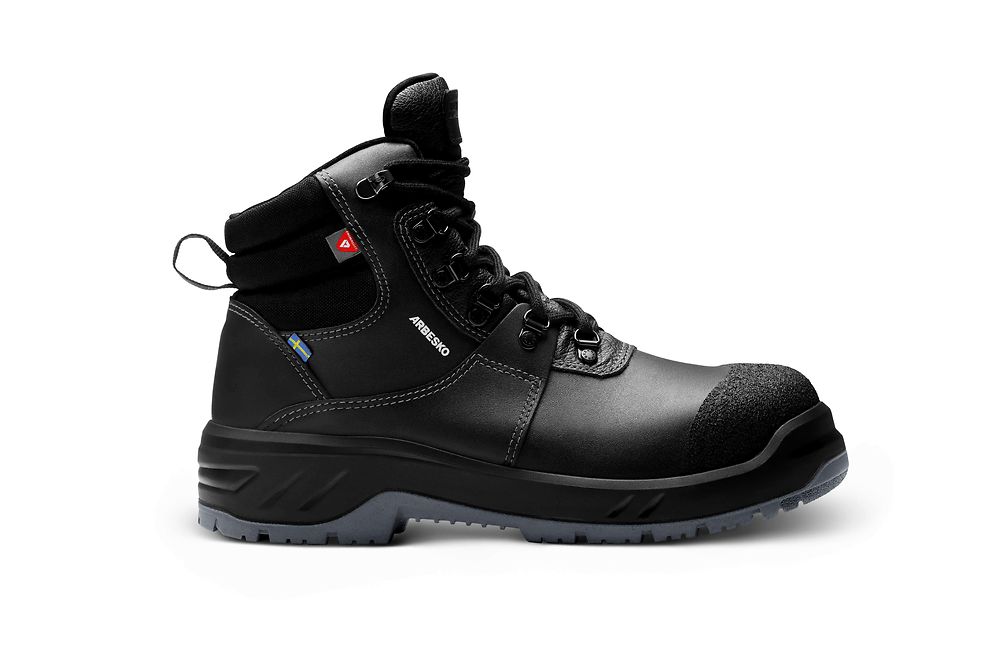
A work boot has a higher leg than a work shoe. The safety classes are the same, so a safety boot in S3 meets the same requirements as a safety shoe in S3. The difference is where you work.
Check your shoes before you put them on. Replace them if:
the upper has deep cracks
the toe cap shows through the wear
the sole has cracked or come away from the upper
the tread on the sole is less than 1.5 mm deep
the lining is torn or has sharp edges
the laces, zip or hook-and-loop fastening do not work
Only replace the insole with the same insole from the manufacturer. The shoe is tested with its own insole. The full list is in our Guide to safety footwear.
Frequently asked questions
Are work shoes the same as safety shoes?
No. Work shoes is the umbrella term. A safety shoe has a toe cap and complies with EN ISO 20345. An occupational shoe has no toe cap and complies with EN ISO 20347.
Which work shoes are best for winter?
Choose a shoe or boot with a cold-insulating sole (CI) and a warm lining. If you stand in water or wet snow, choose S7.
Are S3 shoes waterproof?
No. In S3, only the upper is tested against water. For a shoe where the whole shoe is tested, choose S6 or S7.
Are there work shoes for wide feet?
Yes. Bredsjö is Arbesko’s series for wide feet, available as both a shoe and a boot.
Are there work shoes for women?
Yes. Arbesko shoes are built on a narrower women’s last up to size 38.
What is the difference between work footwear, protective footwear and safety footwear?
Work footwear is an everyday term for work shoes. Protective footwear usually means safety footwear, that is, shoes with a toe cap.
We are currently working on upgrading the Partner Portal with new features and an improved user experience. During this time, the portal will be temporarily unavailable.
We apologise for any inconvenience this may cause and are happy to assist you via email: