A good winter safety boot protects against three things: cold from below, wet and slippery surfaces. Look for the marking CI for a cold-insulating sole and safety class S7 for a water-resistant whole shoe (WR). Choose a warm lining and a fit with room for thicker socks. No shoe is slip-proof on ice, so the tread and rubber of the sole matter a lot.
Cold, wet and slippery surfaces are stopped by different parts of the shoe. A shoe can be good at one of them but not the others.
123
1
Cold · sole and lining
Cold comes from below, from snow, ice and cold floors. A cold-insulating sole (CI) stops it, and the lining keeps the warmth in.
2
Wet · upper and seams
Water comes from melting snow, slush and puddles. Safety class S7 includes WR: the whole shoe is tested as water-resistant.
3
Slip · outsole
Grip depends on the rubber and tread of the sole. A slip-resistant sole (SR) is tested on ceramic tiles with glycerine, not on ice.
That is why the safety class alone is not enough. Winter properties are often shown as separate symbols after the class.
Cold: look for CI
CI means that the sole is cold-insulating. The shoe is tested in the cold, and the temperature inside the shoe may drop by no more than 10 degrees during the test.
CI applies to the sole, not the whole shoe. How warm the shoe feels also depends on the lining, your socks and how much you move.
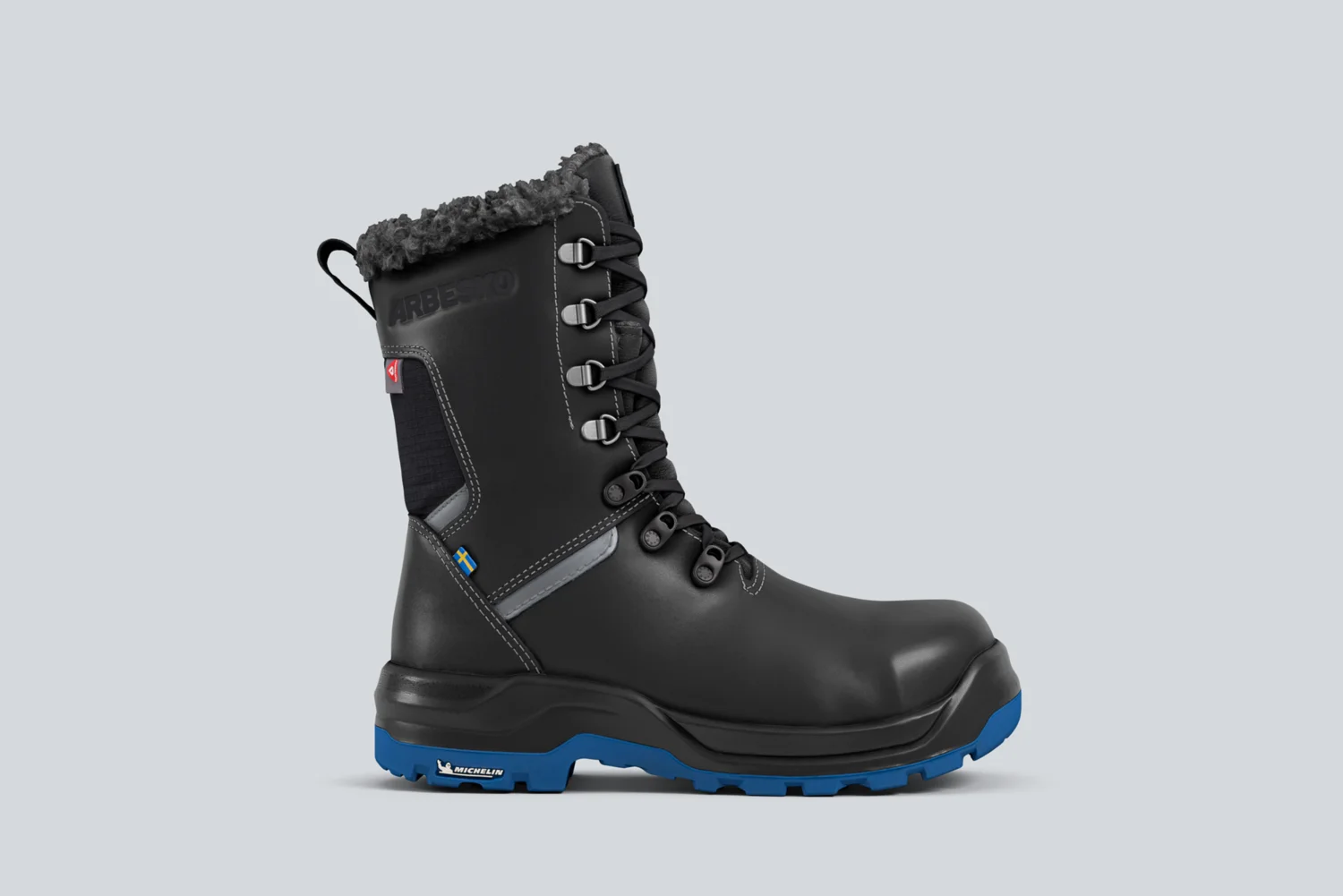
CI is never part of a safety class. If the shoe has the property, the symbol must be written out, for example S7S CI. All four models in the Kiruna series are marked CI.
Waterproof safety footwear? Look for S7
Safety footwear is not tested as fully waterproof. Protection against water is shown in the safety class instead, and it is the number after the S that matters. WR is the symbol for a water-resistant whole shoe. It is included in S7 and is therefore not written out separately on those shoes.
Safety class
Upper resists water (WPA)
Whole shoe water-resistant (WR)
Penetration-resistant midsole
S3
Yes
No
Yes
S7
Yes
Yes
Yes
In slush and wet snow, S7 is the safest choice. The whole shoe is tested, not just the upper. Leather can resist water, but water finds its way in through seams and the tongue unless the whole shoe is tested. Read more about the difference in S3 or S7?
All Kiruna models have safety class S7S. That means the same protection as S3S, plus a water-resistant whole shoe (WR).
Slip: SR is not tested on ice
SR means that the sole has passed the slip test on ceramic tiles with glycerine, a slippery and oily surface. The test is demanding, but it is not carried out on ice or snow.
No shoe is slip-proof on ice.
What helps in practice:
a coarse, open tread that sheds snow and slush
a rubber compound that keeps its grip in the cold
ice cleats on really icy surfaces
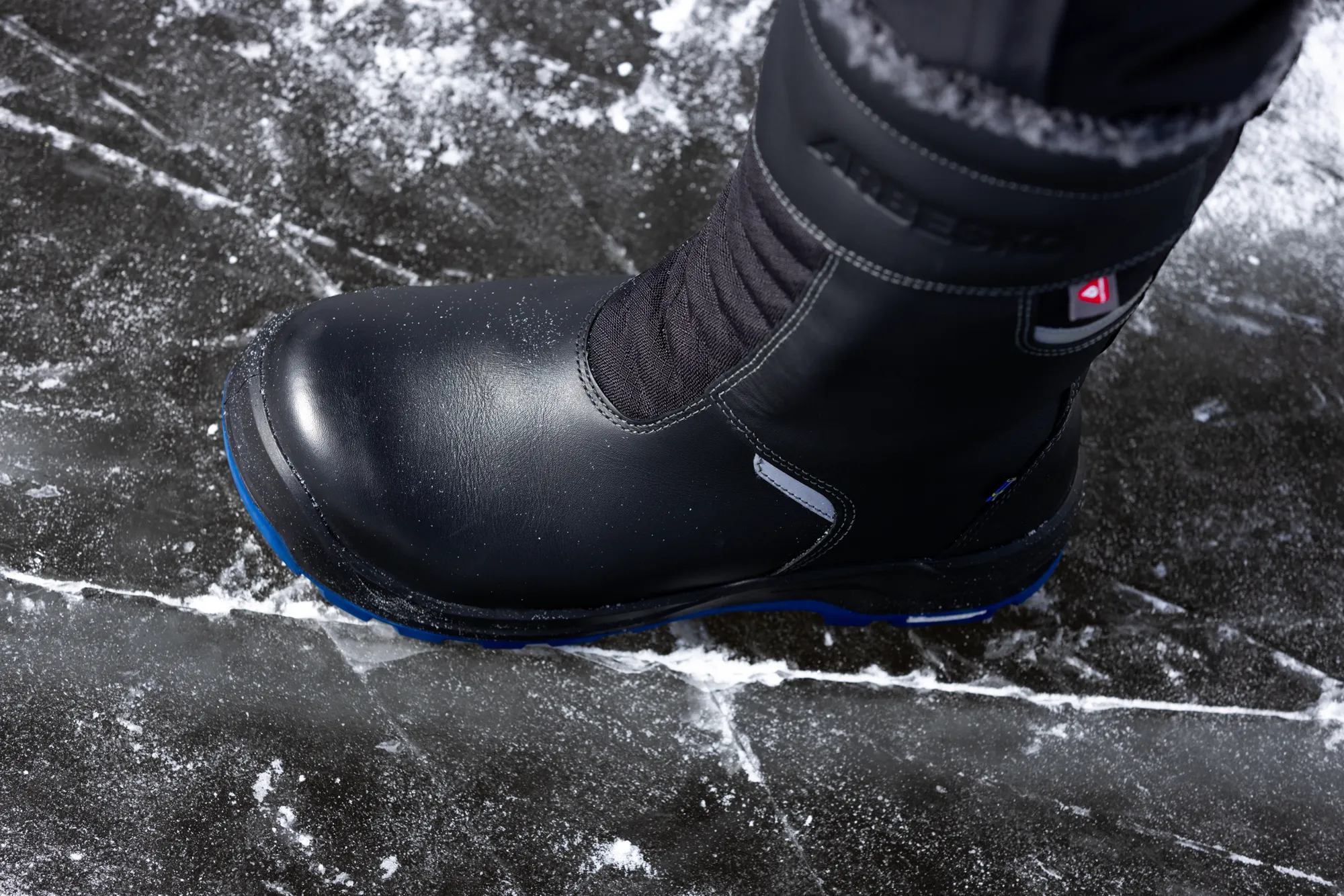
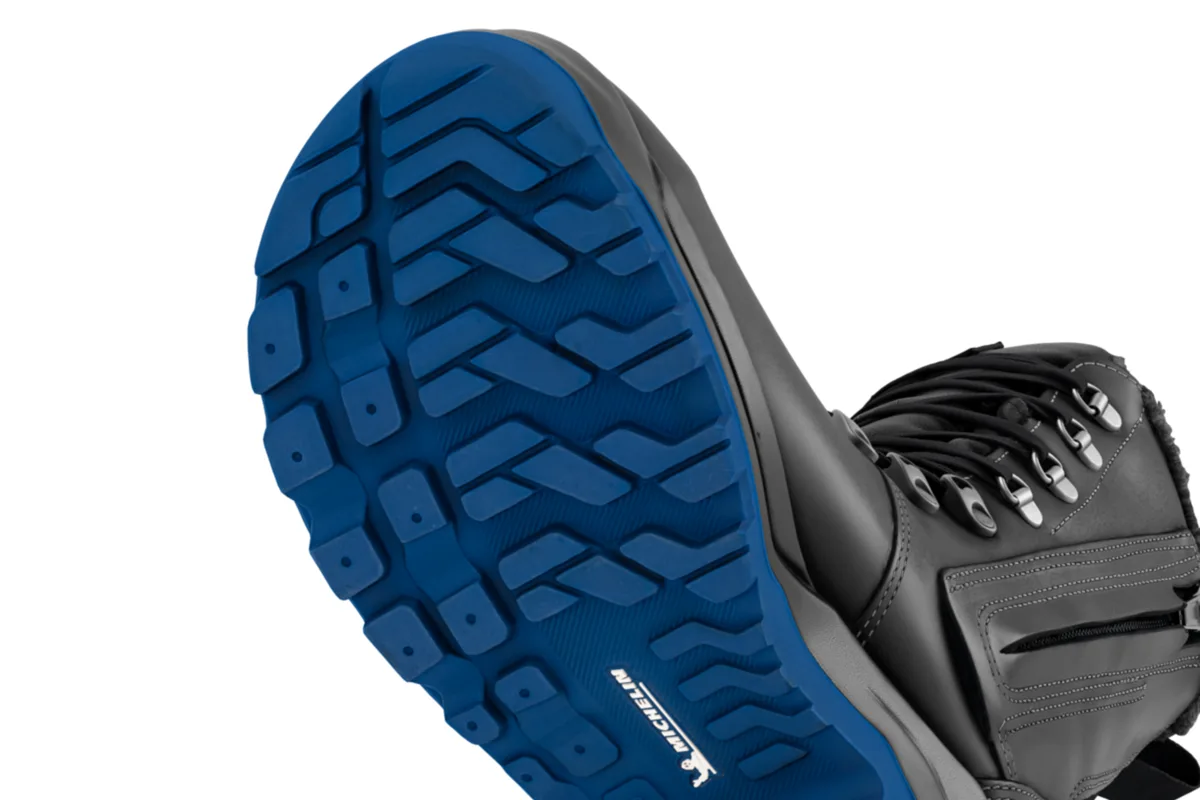
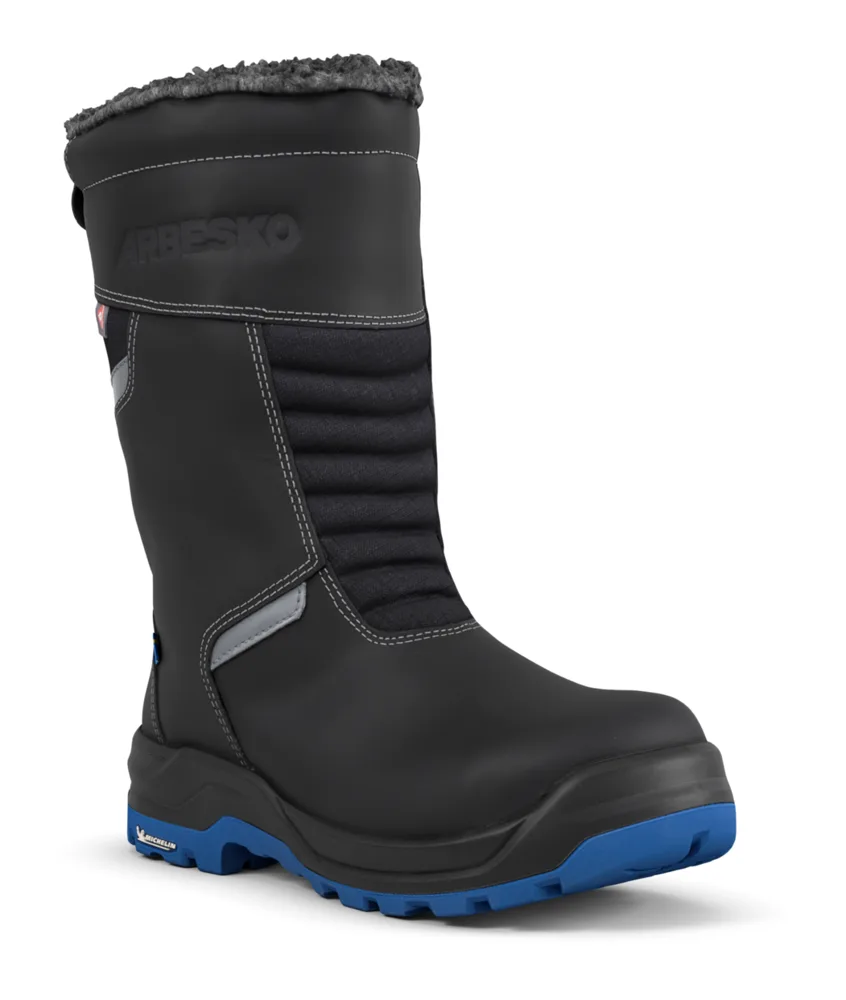
Coarse, open tread on the Kiruna 835.
If you see SRA, SRB or SRC, these are markings from the previous edition of the standard. Today the slip marking is called SR. The Kiruna series has SR and a nitrile rubber outsole that is also heat-resistant (HRO) and fuel oil resistant (FO).
Lining and fit
The lining decides how warm the shoe is. Wool keeps you warm even when it gets a little damp, and synthetic insulation such as PrimaLoft® is light and warms well in the cold.
The fit is just as important. A shoe that pinches restricts blood flow, and your feet get cold faster. So try on winter footwear with the socks you will wear at work.
The Kiruna series comes in two levels:
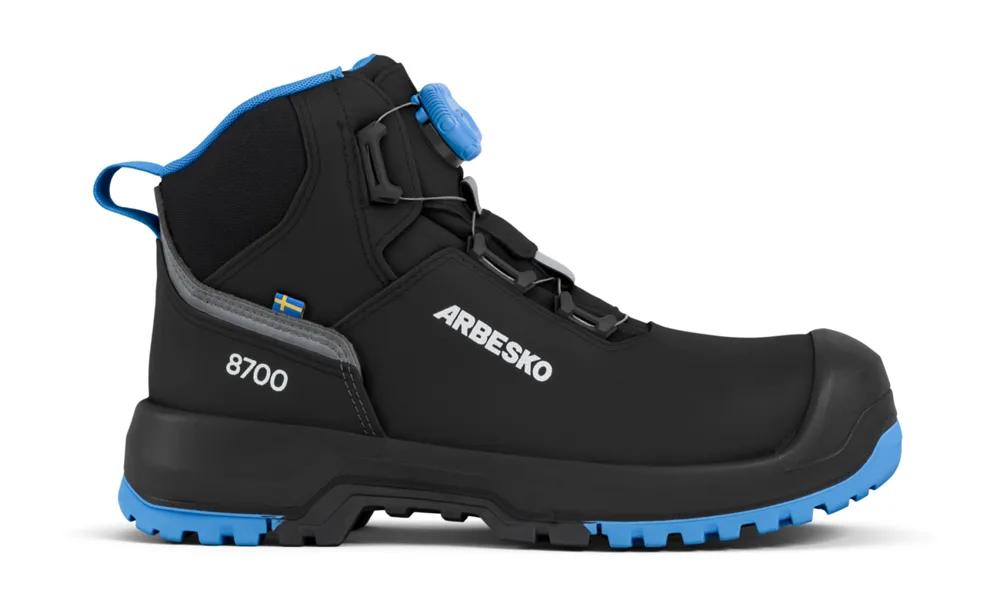
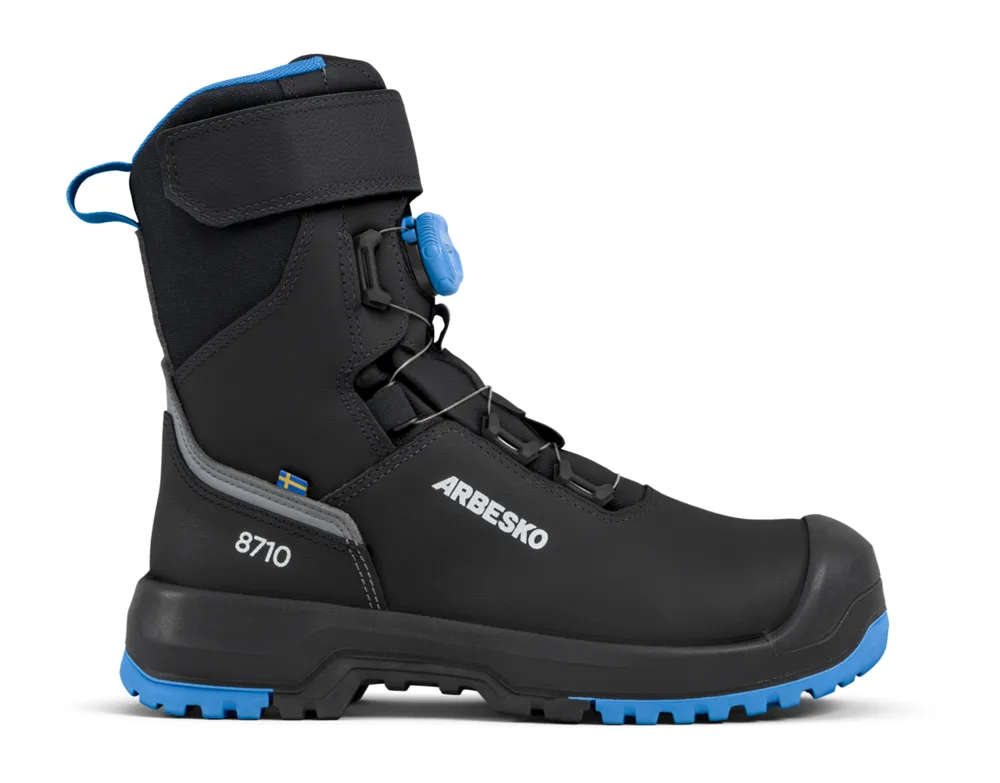
8700 and 8710 have a wool lining and the BOA® Fit System, which gives a fast, precise fit without effort – even with gloves on.
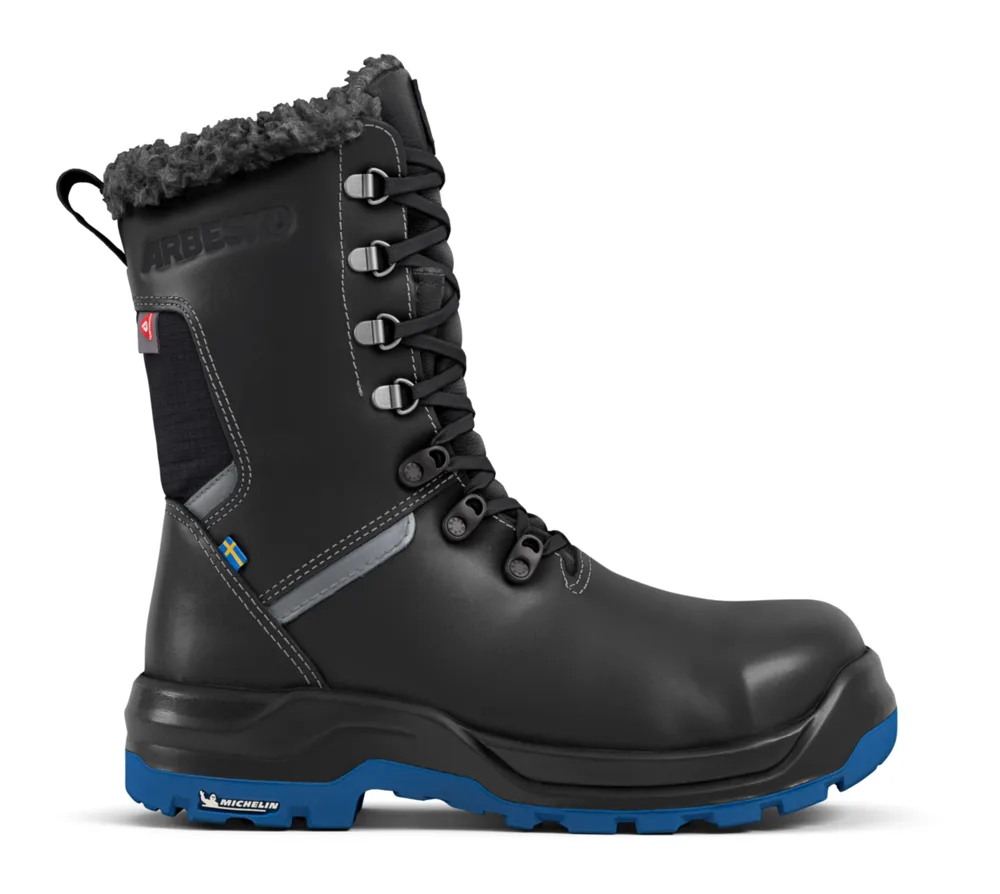
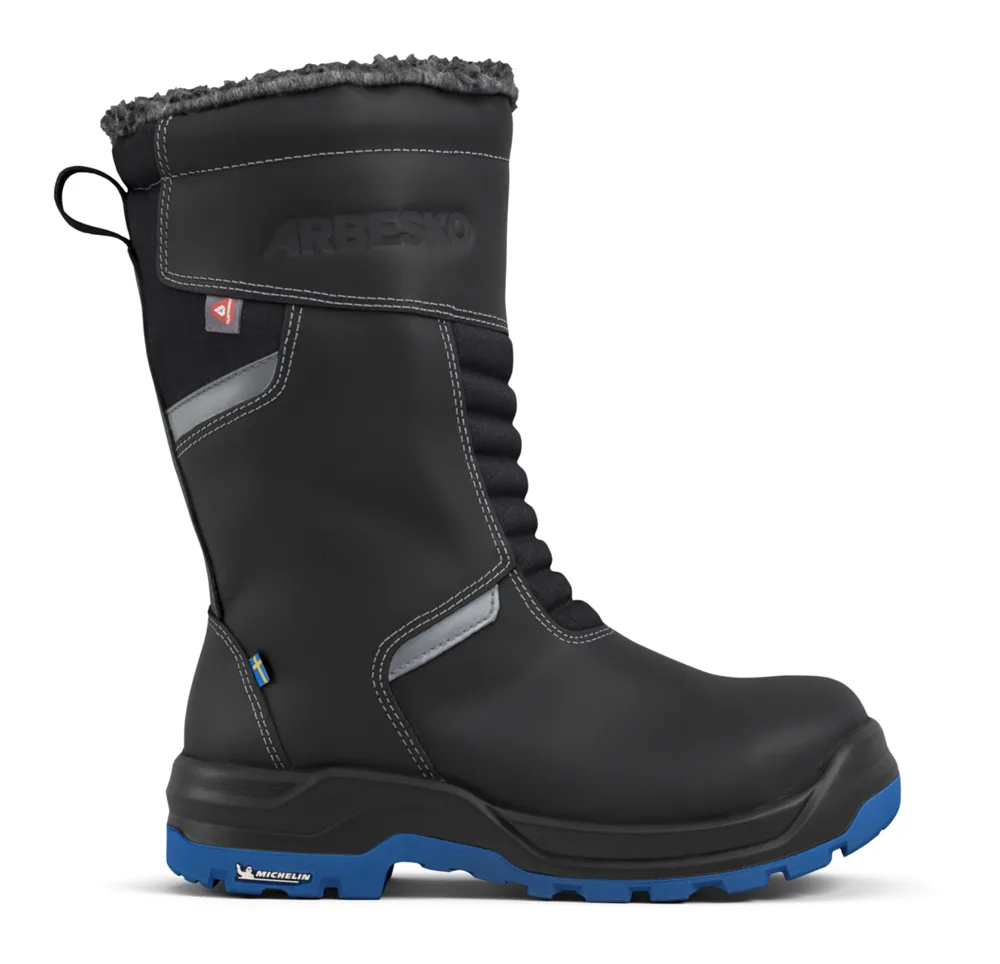
835 and 837 have a double lining of PrimaLoft® Bio™ and wool. That requires an extra-wide fit, and at that width a steel toe cap is what fits. If you have wide feet, they are a good choice.
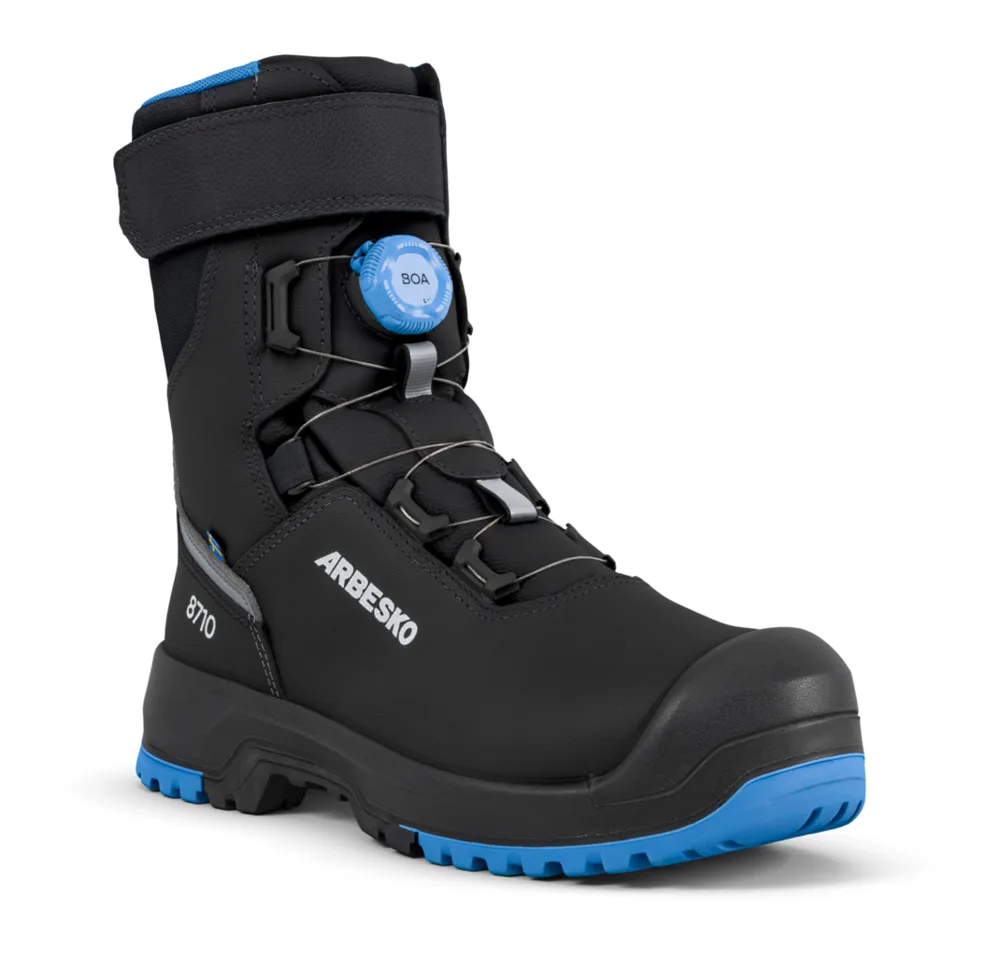
Kiruna 8710 with wool lining and the BOA® Fit System.
Boot or high-leg boot
A boot sits firmly around the foot and works well when you move a lot. A high-leg boot protects higher up against deep snow and slush and is quick to pull on.
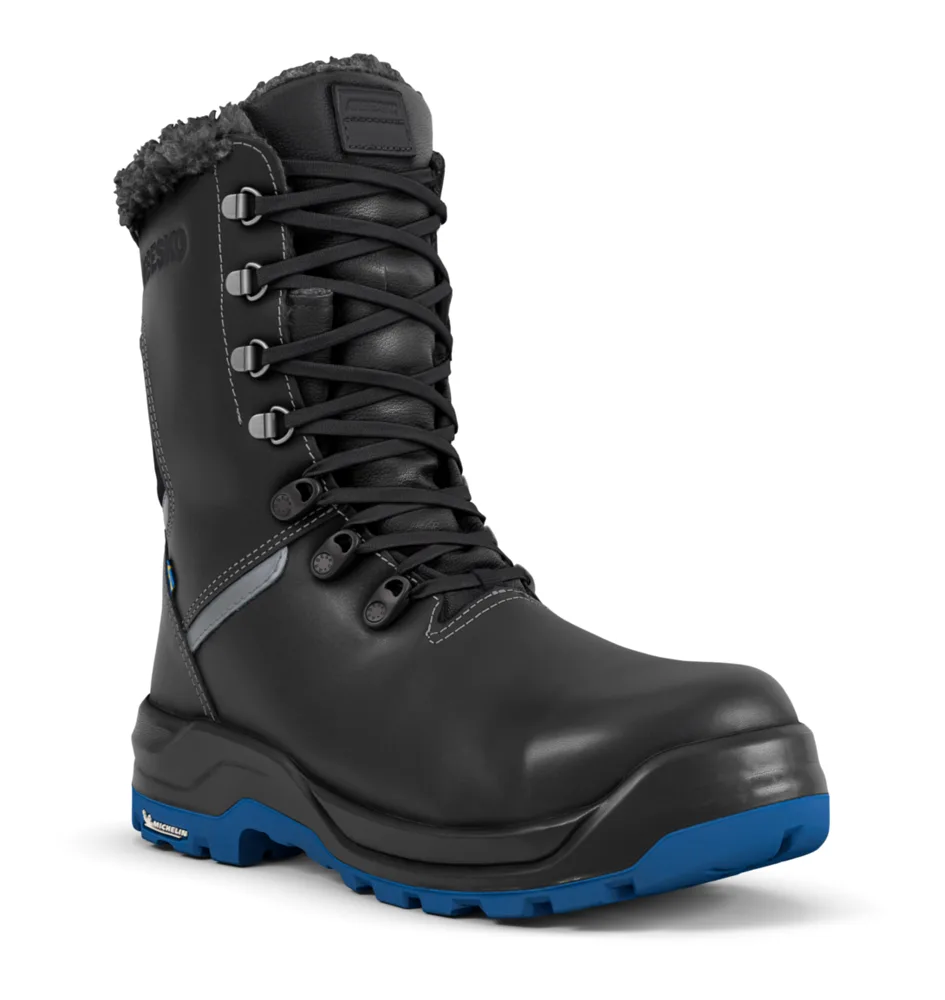
Kiruna 835 BootKiruna 837 High-leg boot
The Kiruna 835 (boot) and 837 (high-leg boot) have the same lining and the same marking. So the choice comes down to how deep the snow is where you work. The 8700 and 8710 boots differ mainly in leg height: the 8710 has a high leg and is best in deep snow.
One pair all year or two?
If you work outdoors, you usually need a winter pair. A shoe that is warm enough in January is too warm in July, and a breathable summer shoe lets in both cold and water.
If you mostly work indoors in heated premises, one pair may be enough all year. How to choose a safety class based on the risks of your job is explained in our Guide to safety footwear.
Winter care
Winter footwear is worn hardest by moisture and road salt. A few simple habits make it last longer:
Let the shoes dry at room temperature, not on the radiator. Strong heat dries out and cracks the leather.
Take out the insole so that the lining dries properly.
Wipe off road salt with a damp cloth. Salt dries out the leather and leaves white marks.
Kiruna is the Arbesko series for cold, snow and slush. All four models have safety class S7S with a cold-insulating sole (CI) and slip resistance (SR).
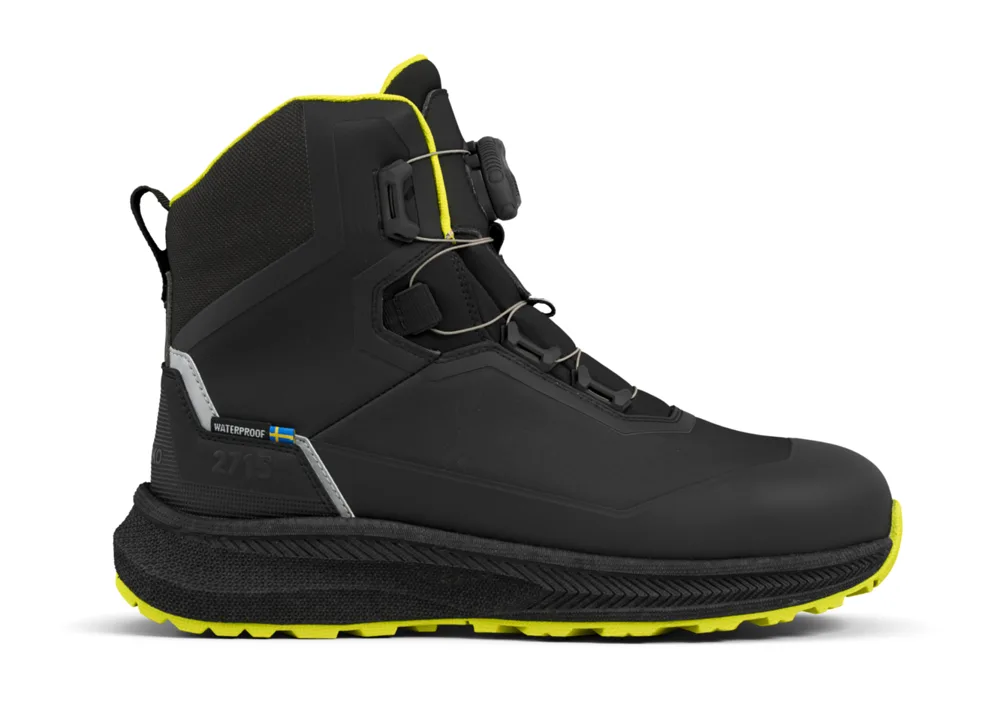
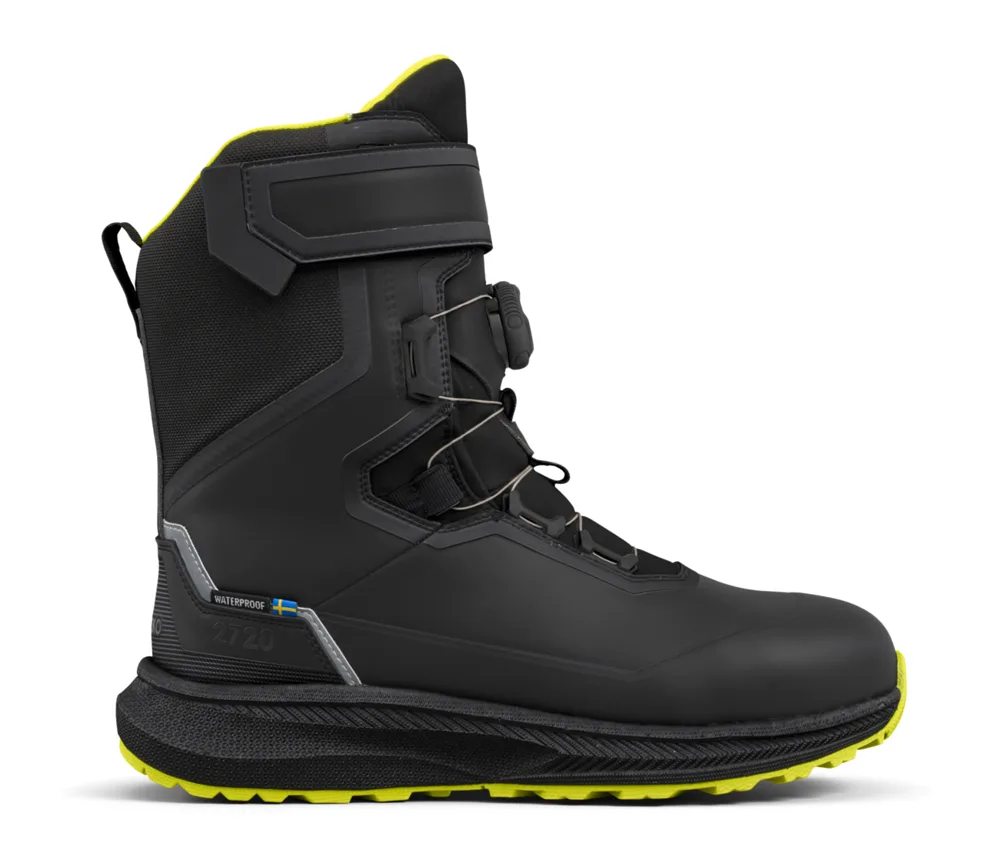
If you want a sportier winter boot, built for movement, there are the Tech 2715 and Tech 2720. Both have safety class S7S with a cold-insulating sole (CI), an insulating warm lining with Thinsulate™, the BOA® Fit System and a composite toe cap. The 2715 is mid-height and the 2720 is high.
The ReBOUND™ cushioning keeps working down to −20 degrees, and the Tech models do not set off metal detectors.
Tech 2715 Safety boot, mid-height S7S, CI, FO, HRO, SR See Tech 2715Tech 2720 Safety boot, high S7S, CI, FO, HRO, SR See Tech 2720
Look for CI and a thick lining. In the Kiruna series, the 835 and 837 are the warmest, with a double lining of PrimaLoft® Bio™ and wool.
Is S7 the same as waterproof?
S7 includes WR, which means that the whole shoe has been tested and no water got in during the test. It is the highest level for water in the standard.
Is a composite toe cap warmer than a steel toe cap?
Cold insulation is tested on the sole, not the toe cap. Choose a shoe marked CI rather than choosing a toe cap for warmth.
Are there slip-proof winter shoes?
No. The SR slip test is not carried out on ice. A coarse tread helps, and on really icy surfaces you need ice cleats.
Should winter footwear be a size bigger?
It should have room for a thicker sock without pinching. Try it on with the socks you will wear at work.
We are currently working on upgrading the Partner Portal with new features and an improved user experience. During this time, the portal will be temporarily unavailable.
We apologise for any inconvenience this may cause and are happy to assist you via email: