ESD shoes conduct static electricity away to protect sensitive electronics. They don't protect you, they protect the product you are working with. Here we explain the difference between ESD and antistatic shoes, what an EPA is and how to choose ESD safety shoes.
ESD stands for electrostatic discharge. When we walk and move around, the body builds up a charge. A discharge can damage sensitive components, often without anyone noticing straight away.
An ESD shoe gives the charge a controlled path to the floor, instead of a sudden discharge into the component.
The shoe is one link in the chain
Sock, insole, shoe and floor must work together. If one link is broken, no charge is conducted away. If you change the insole, the new one must be ESD-approved, because an ordinary comfort insole breaks the chain. An antistatic sock is recommended.
ESD, antistatic and EH
Three terms that are often mixed up.
Antistatic (A)
Included in safety classes S1 and above in EN ISO 20345. The shoe reduces static build-up, with a resistance above 100 kΩ and at most 1,000 MΩ. It does not give complete protection.
ESD
For workplaces that protect electronics. ESD is not regulated by EN ISO 20345 but by the EN IEC 61340 series. The requirements are tighter than for an antistatic shoe, and the shoe conducts the charge away more predictably. No safety class in EN ISO 20345 requires ESD.
EH
A US marking under ASTM F2413, not an EN ISO marking. It concerns electrical hazard and solves a different problem from ESD.
Neither antistatic shoes nor ESD shoes are electrically insulating. They are not suitable for work on live electrical installations. Electrically insulating footwear is covered by EN 50321-1.
What does the ESD symbol mean?
The ESD symbol shows that the shoe is made for work with electrostatically sensitive components. The symbol is standardised (IEC 60417-6202) and always yellow.
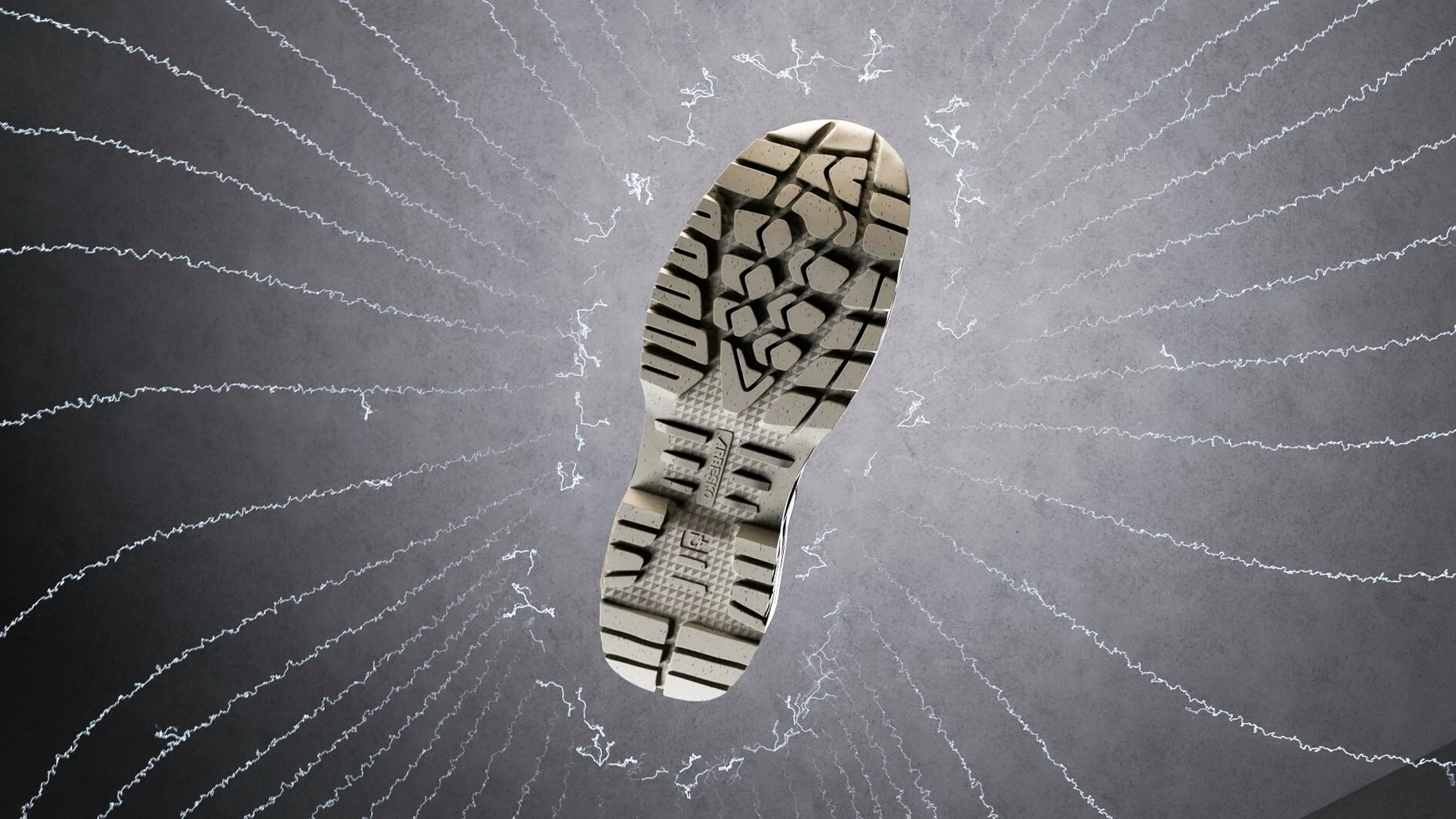
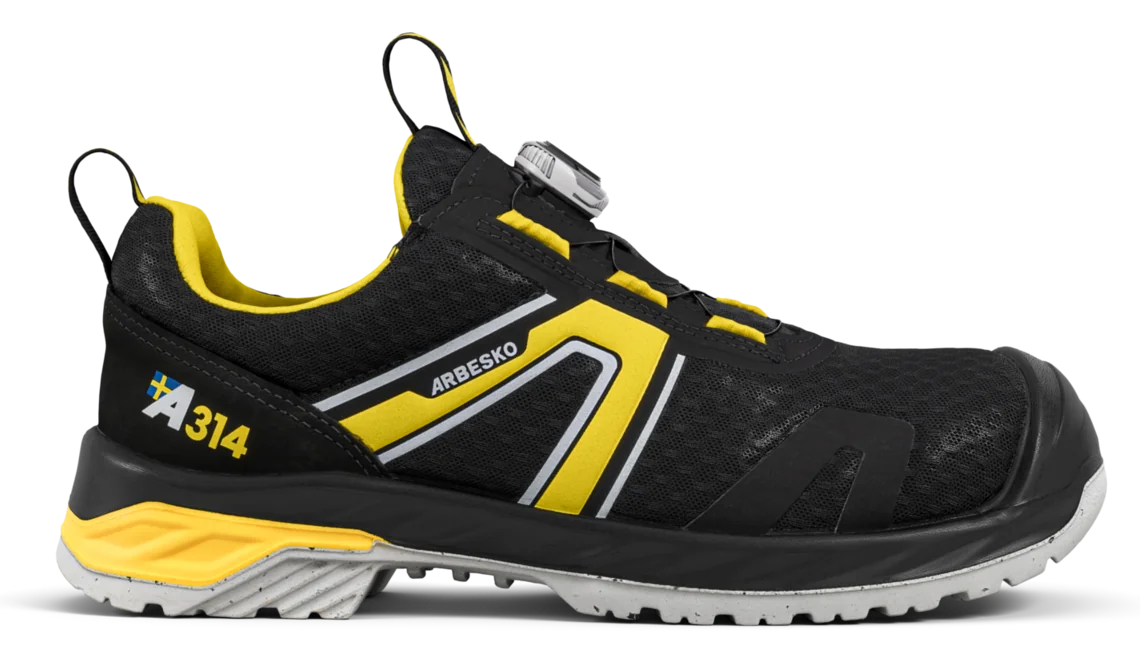
You will find the symbol on all our safety shoes with ESD. On the A-Series it is inside the tongue.
EPA, the protected area
EPA stands for ESD Protected Area, a designated area where floors, benches, clothing and shoes are adapted to conduct static electricity away.
The area is marked with the ESD symbol.
Personal ESD equipment, such as shoes, is tested before entering.
Anyone who fails the test is not let in.
What affects the function
The resistance of the shoe changes with flexing, dirt, moisture and wear. Check the shoes regularly and replace them when they are worn. The shoe may not work as intended in a wet environment.
Who needs ESD shoes?
ESD shoes are needed where sensitive electronics are handled, for example in assembly, repair and testing, in laboratories and in medical technology.
They are the wrong choice for anyone working on live electrical installations, such as electricians. There you need footwear that meets EN 50321-1. The same applies to high-voltage work on electric cars. ESD shoes give no protection against that.
If you are unsure about the requirements at your workplace, ask the person responsible for ESD which standard the EPA follows, whether shoes are tested at the entrance, what other protection is needed (penetration-resistant midsole, water, heat) and whether staff change insoles themselves.
A-Series with ESD+
All models in A-Series are ESD-marked and have ESD+. The insole and the insole board are made of a different material that conducts static electricity better, and they sit early in the chain, before the charge reaches the outsole and the floor.
No. Antistatic is included in the safety class and reduces static build-up. ESD is a separate protection for electronics environments, with tighter requirements.
Does any safety class require ESD?
No. EN ISO 20345 sets no ESD requirements. The shoe must carry a separate ESD marking.
Does an ESD shoe protect against electric shocks?
No. The shoe is not electrically insulating and must not be used for work on live electrical installations.
Can I change the insole?
Yes, but only to an ESD-approved one. An ordinary comfort insole breaks the chain.
Do socks matter?
Yes. They are part of the chain, and an antistatic sock is recommended.
We are currently working on upgrading the Partner Portal with new features and an improved user experience. During this time, the portal will be temporarily unavailable.
We apologise for any inconvenience this may cause and are happy to assist you via email: